Abstrakte Klassen
Motivation
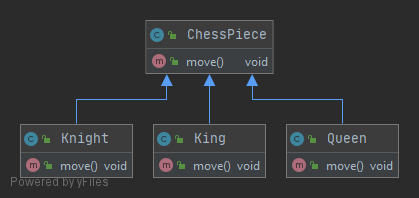
public class ChessPiece {
    public void move() {
        // ?
    }
}chessPiece.play()?new ChessPiece()?
abstract
public abstract class ChessPiece {
    private Position position;

    protected ChessPiece(Position position) {
        this.position = position;
    }

    public abstract void move();
}abstractMethode hat keinen BodyabstractMethode ⟹ Klasseabstractnew AbstractClass()🚫- Konstruktor für
super()✔️
- Childklassen müssen alle
abstractMethoden überschreiben
public class King extends ChessPiece {
    @Override
    public void move() {
        moveKnightly();
    }
}
abstract sein
public abstract class RoyalChessPiece extends ChessPiece {}
Sicher nicht
private abstract- man kann nicht overriden
final abstract- man darf nicht overriden
static abstract- statische Member werden nicht vererbt
native abstractnative- Code liegt kompiliert vor
interface
public interface Flyable {
    double GRAVITY = 9.80665;
    void fly();
}- definiert Verhalten
- Fields implizit
public static final - Methoden implizit
public abstract - keine Konstruktoren
- als Compiletyp zulässig
- Klassen implementieren das Interface
- kann mehrere andere Interfaces extenden
- Implementierung checken mit
instanceof
class Eagle extends Bird implements Flyable, Serializable {
    @Override
    void fly() {
        flyHigh(GRAVITY);
    }
abstract class FlyingBird extends Bird implements Flyable {}Flyable[] airForce = new Flyable[50];
airForce[0] = new Jet();
airForce[1] = new Airship();
airForce[2] = new Balloon();
...
for (Flyable flyer : airForce)
flyer.fly();interface Crashable extends Flyable, Speedable {
void crash();
}default/static
public interface Speedable {
    double KM_PER_MPH = 1.60934;
    void speed();

    default void callForHelp() {
        PhoneService.call("122");
    }

    static double convertMphToKmh(double mph) {
        assertValidMph(mph);
        return mph * KM_PER_MPH;
    }

    private static void assertValidMph(double mph) {
        if (!Double.isFinite(mph))
            throw new IllegalArgumentException("Invalid speed: " + mph);
    }
}
Klassen können default-Methoden overriden